Turn the key on a car that ran fine yesterday and you get a click, or nothing at all. The instinct is to blame the big parts: the starter, the alternator, the battery. Sometimes that instinct is right. Often, though, the part that failed fits in the palm of your hand. Fuses and relays sit at the front of almost every electrical circuit in a vehicle, and when one quits, the symptom shows up somewhere else entirely.
That mismatch is where money gets wasted. A driver around Shelby replaces a battery that was never bad, or authorizes a starter on a guess, and the car still will not start because the real fault was a relay upstream.
What a fuse actually does
A fuse is a deliberate weak link. Inside its plastic body is a thin strip of metal sized for a specific current. If current rises above that rating, from a short circuit, a seized motor, or chafed wiring, the strip melts and opens the circuit before the wiring can overheat. The fuse sacrifices itself so the harness and the component do not have to.
Blade fuses, the colored plastic type in most cars and trucks today, are color coded by amp rating, and a replacement must match the original. Installing a higher-rated fuse because the correct one keeps blowing does not fix anything. It removes the protection and lets the fault push excess current through wiring never built for it. A small short becomes melted insulation, damaged connectors, and in the worst cases a harness fire. The blown fuse was the warning, not the problem.
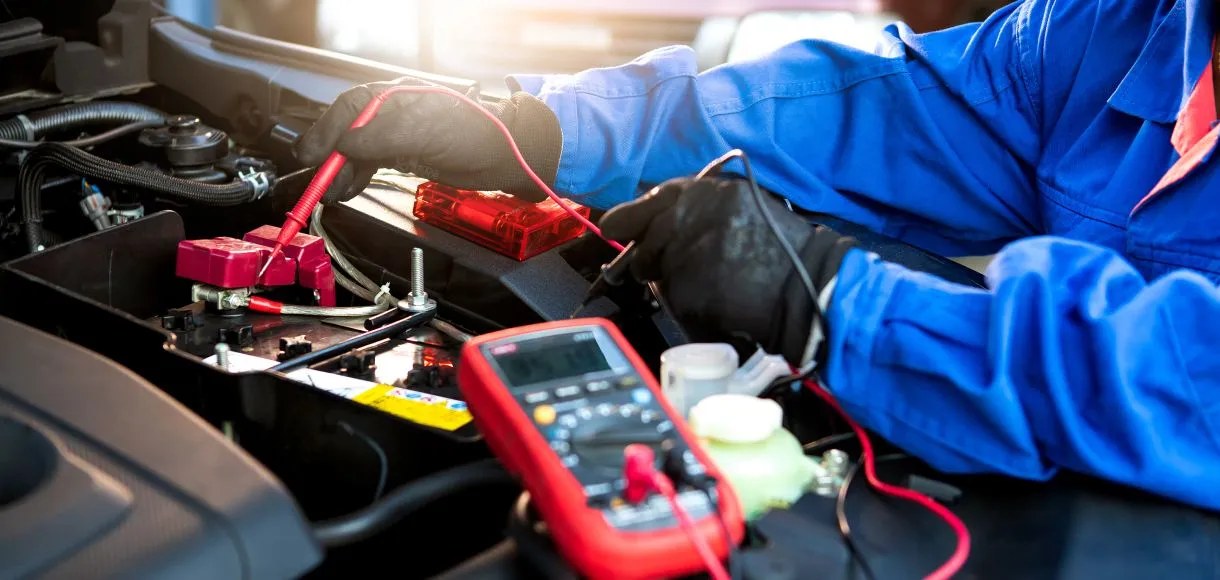
Relays: a small switch doing heavy work
A relay is an electrically operated switch. A low-current signal from a dashboard switch, a key, or a control module energizes a small coil inside it. That coil pulls contacts closed, and those contacts carry the heavy current the load needs: the starter solenoid, the fuel pump, the cooling fan, the air conditioning compressor clutch, the headlights.
It keeps heavy current out of the dashboard switches, shortens the path the big cables run, and lets a computer switch loads it could never power directly. A typical relay has four or five pins and switches loads many times its own control current.
How a bad relay imitates a big failure
Relays fail in ways that point the finger at innocent parts. The contacts inside pit and corrode over years of switching, so a relay can pass some current but not enough. The coil can weaken, so it works cold and quits hot. The contacts can stick intermittently, so the fault comes and goes with temperature, vibration, and humidity, including damp Piedmont North Carolina summer mornings.
Follow the symptoms and the mimicry is obvious. A tired starter relay produces a single click and no crank, exactly like a dead starter or a weak battery. A failing fuel pump relay lets the engine crank normally but never fire, which looks like a fuel or ignition problem. A dead cooling fan relay shows up as an engine that runs cool on the highway and creeps hot in Shelby traffic, which looks like a thermostat fault. An alternator can even take the blame when a charging problem traces back to a fuse in its circuit rather than the unit itself.
The swap test, and what ignoring the small part turns into
Because so many relays in a fuse box are identical, a shop's first move is often simple: swap the suspect relay with an identical one from a circuit known to work, such as the horn, and see whether the fault moves. If the dead circuit revives and the borrowed one goes dead, the relay is convicted in about a minute. The same logic applies on the bench, where testing a starter off the vehicle separates a failed unit from a good one starved by its circuit.
Ignoring a failing relay rarely means the problem stays put. Contacts that arc as they deteriorate generate heat, and that heat can melt the relay socket and damage the fuse box terminal under it. A fan relay that works only sometimes is an overheating episode waiting for the wrong traffic jam, and one serious overheat can turn a small electrical fault into a major engine repair. A fuel pump relay that cuts out at random is a vehicle that stalls without warning. The same pattern holds on farm equipment, where Willis Auto Electric also works on tractor electrical systems: a small switching fault idles a machine in the middle of work that cannot wait.
Checks you can do, and where to stop
- Find both fuse boxes. The manual or the diagram inside the lid maps each fuse and relay to its circuit.
- Pull a suspect fuse and look at the strip through the clear top. A broken or darkened strip means something made it blow.
- Replace a fuse once, with the exact same amp rating. If the new one blows right away, stop. The circuit has a fault that needs finding.
- Listen for relay clicks. Many relays click audibly when switched on, and a silent one is a useful clue.
- Note when the fault happens: only hot, only cold, only after rain. That pattern makes intermittent faults far easier to find.
Stop where a fuse keeps blowing, a relay or socket shows heat damage, or the fault affects starting, cooling fans, or anything safety related. Those need circuit testing with a meter and a wiring diagram instead of swapping parts on suspicion. Guessing gets expensive: each wrong part is money spent, and the original fault is still there.
Common questions
Can I use a higher-amp fuse if the correct one keeps blowing?
No. A fuse that blows repeatedly is reporting a fault, such as a short or a motor drawing too much current. A higher-rated fuse removes the protection and lets that fault overheat the wiring instead.
How can I tell whether it is the relay or the starter?
Swap the starter relay with an identical relay from a non-essential circuit, such as the horn. If the engine then cranks, the relay was the fault; if nothing changes, the starter and battery need testing.
Why does my electrical problem only happen sometimes?
Relay contacts wear gradually and often fail with heat, cold, or vibration before they fail completely. A part that works in the morning and quits on a hot afternoon is a classic worn relay pattern.
Photos in this guide are representative stock images.
← All guides from Willis Auto Electric← Back to Willis Auto Electric